Who, and What, Governs Us
In this election year, it seemed neither desirable to address the question of power head-on nor possible to ignore it. Instead, this theme invites us to explore who, and what, governs us, consciously or unconsciously, whether the authority exercised over us is chosen or imposed.
As algorithms—and now artificial intelligence—continue to expand their influence, as capitalism grows increasingly aggressive, democracy comes under mounting pressure, the planet faces unprecedented challenges, and emotions are harnessed to shape public opinion, the temptation to embrace a dystopian vision of the world is strong. This programme takes the opposite approach. Rather than dwelling on decline, it seeks to identify the openings through which hope emerges, inviting us to rethink digital spaces, democratic forums, geopolitical relations, ways of living, and the many forms of intelligence that shape our collective futures.
Conference Schedule
- Tuesday 27 October 2026
- Tuesday 17 November 2026
- Tuesday 1 December 2026
- Tuesday 12 January 2027
- Tuesday 9 February 2027
- Tuesday 23 March 2027
- Tuesday 13 April 2027
- Tuesday 11 May 2027
Tuesday, October 27, 2026 - Can AI Be Conscious?
With Pierre GODARD and Jim GABARET
Can consciousness exist without a body, lived experience, or a sense of self? Recent AI systems sometimes appear aware that they are being tested—and may even seem to deceive us—yet we have no access to their inner perspective. We therefore tend to regard them as opaque mechanical black boxes. But is the human self, often considered unique and irreducible, really so transparent? Shaped by inherited narratives, blind to many of its own motivations, and embedded in a body saturated with sensory input, our consciousness may be far more elusive than we like to believe. What if AI were to turn the question back on us: who, or what, is really in control?
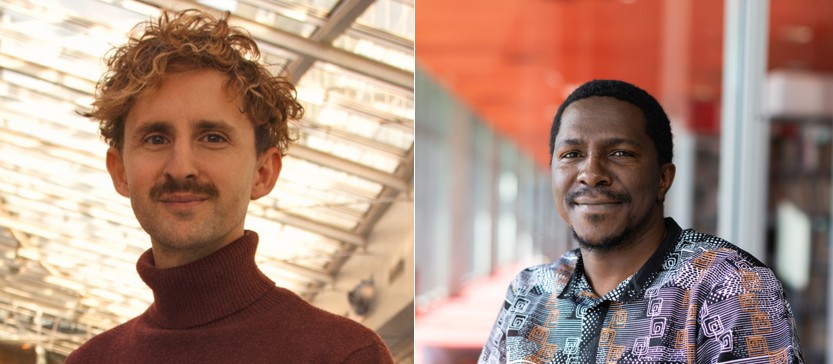
Pierre Godard (left) is a choreographer and theatre director, and holds a PhD in Natural Language Processing from Université Paris-Saclay. His work explores the future of dance and its relationship to society as a whole.
Jim Gabaret (right) is a philosopher, researcher and associate member of the Institut des sciences juridique et philosophique de la Sorbonne (Université Paris 1 Panthéon-Sorbonne), specialising in New Realism. He is the author of L'art des IA (The Art of AI, Presses Universitaires de France, 2025).

Tuesday, November 17, 2026 - Queer Algorithms: Disrupting Technology, Imagining Our Futures
With Guillaume CHEVILLON
Algorithms anticipate our preferences, shape our decisions, and increasingly influence the futures that lie ahead. Optimised for immediate performance, they tend to lock our societies into trajectories we have not consciously chosen. What if queer thinking offered an alternative? Embracing error, valuing the right to be forgotten, welcoming chance, and resisting fixed categories could all become resources for imagining AI systems that are more resilient, more open, and ultimately freer.
Drawing on his recent book Queer Algorithms (B42, 2026), Guillaume Chevillon explores the intersections of economics, technology and culture, inviting us to rethink the futures encoded in today's digital systems.
Guillaume Chevillon is Professor of Economics at ESSEC Business School, where he holds the Chair in Cultural Industries, Art and Creative Technologies. He also directs the Metalab for AI, Data and Society.

Tuesday, December 1, 2026 - The Power of Geeks: How Counterculture Became a Political Weapon
With Damien LELOUP
Once considered marginal, geek cultures—science fiction, video games, fantasy, hacker communities, and internet memes—have become a major political battleground. Figures such as Steve Bannon and Elon Musk have recognised the influence of these communities and sought to harness their imaginaries in support of reactionary political agendas.
Drawing on a cultural investigation, Damien Leloup examines how geek culture has been appropriated for political purposes, while also highlighting the forms of resistance it continues to inspire around creativity, freedom of expression, and power.
Damien Leloup has been a journalist at Le Monde for the past twenty years, covering technology and its impact on society. A self-confessed geek, he is passionate about role-playing games, video games, and speculative fiction in all its forms. The Power of Geeks is his first book.

(photo ©Pierre_Hybre)
Tuesday 12 January 2027 - Our Mobilities Under Surveillance
With Florent CASTAGNINO and Calvin MINFEGUE
The surveillance of mobility, whether on roads or railways, has always been — and remains — a central issue in the assertion of political power and the organisation of territories. In this discussion, we will explore the different forms this policing of mobility and, more broadly, of movement can take. The aim is to shed light on how transport infrastructures are key instruments in asserting political and economic authority, but can also contribute to individual emancipation.
Florent Castagnino is an associate professor at Institut Mines-Télécom. A sociologist specialising in science and technology, work and organisations, he focuses on contemporary transformations in the relationship between cities, security and surveillance.
Calvin Minfegue is a lecturer and researcher at the Catholic University of Central Africa (Cameroon), currently in residence at the Nantes Institute for Advanced Study. A political scientist and geographer, his research focuses on border dynamics and the governance of movement in Central Africa.
(photo CM ©Pauline Théon)
Tuesday 9 February 2027 - The Violence of Order, the Dignity of Uprising
With Younn LOCARD, Florent GROUAZEL and Alix LEVAIN
Younn Locard and Florent Grouazel have spent around twelve years telling the story of the French Revolution, a formative period in contemporary political life. Their characters bring to life the overthrow of a social order and its structures of domination, but also the re-establishment of institutions and a new imaginary of order, extending all the way to violence. In conversation with anthropologist Alix Levain, they will bring together their perspectives on power, uprisings and social transformations.
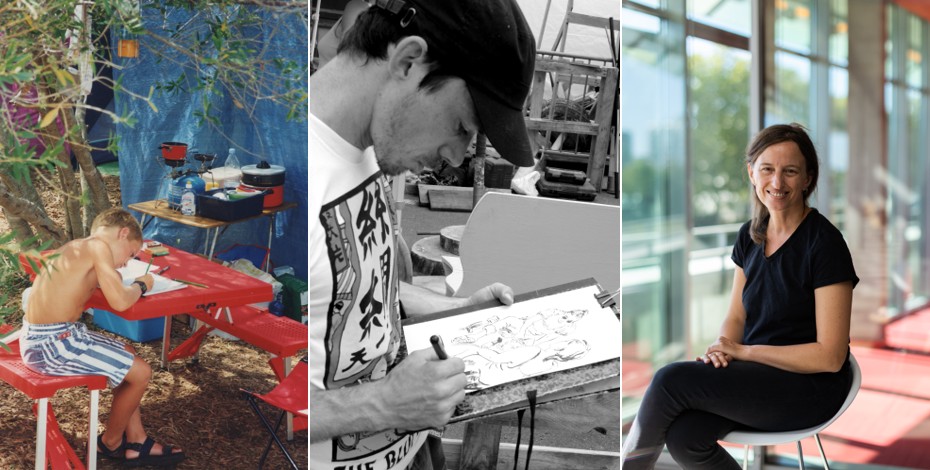
Younn Locard is a comic-book artist whose observational drawing practice has been shaped in particular by a two-year journey around the world.
Florent Grouazel is an author and illustrator whose work explores collective representations and political imaginaries. Together with Younn Locard, he created the Révolution trilogy, published by Actes Sud since 2019.
Alix Levain is an anthropologist and research fellow at the CNRS. Her work explores relationships between societies and their environments. She is currently in residence at the Nantes Institute for Advanced Study as part of the Chair Living Through the Lens of Planetary Boundaries.
(photo AL ©Pauline Théon)
Tuesday 23 March 2027 - Who Do We Work For?
With Dominique MEDA
For a long time, work has been — and for many people still is — an activity governed by rules they had no part in choosing. Between algorithmic management and the authoritarian turn in the workplace, how can work become a place of freedom once again? How can it contribute to ecological transition and the repair of the world?
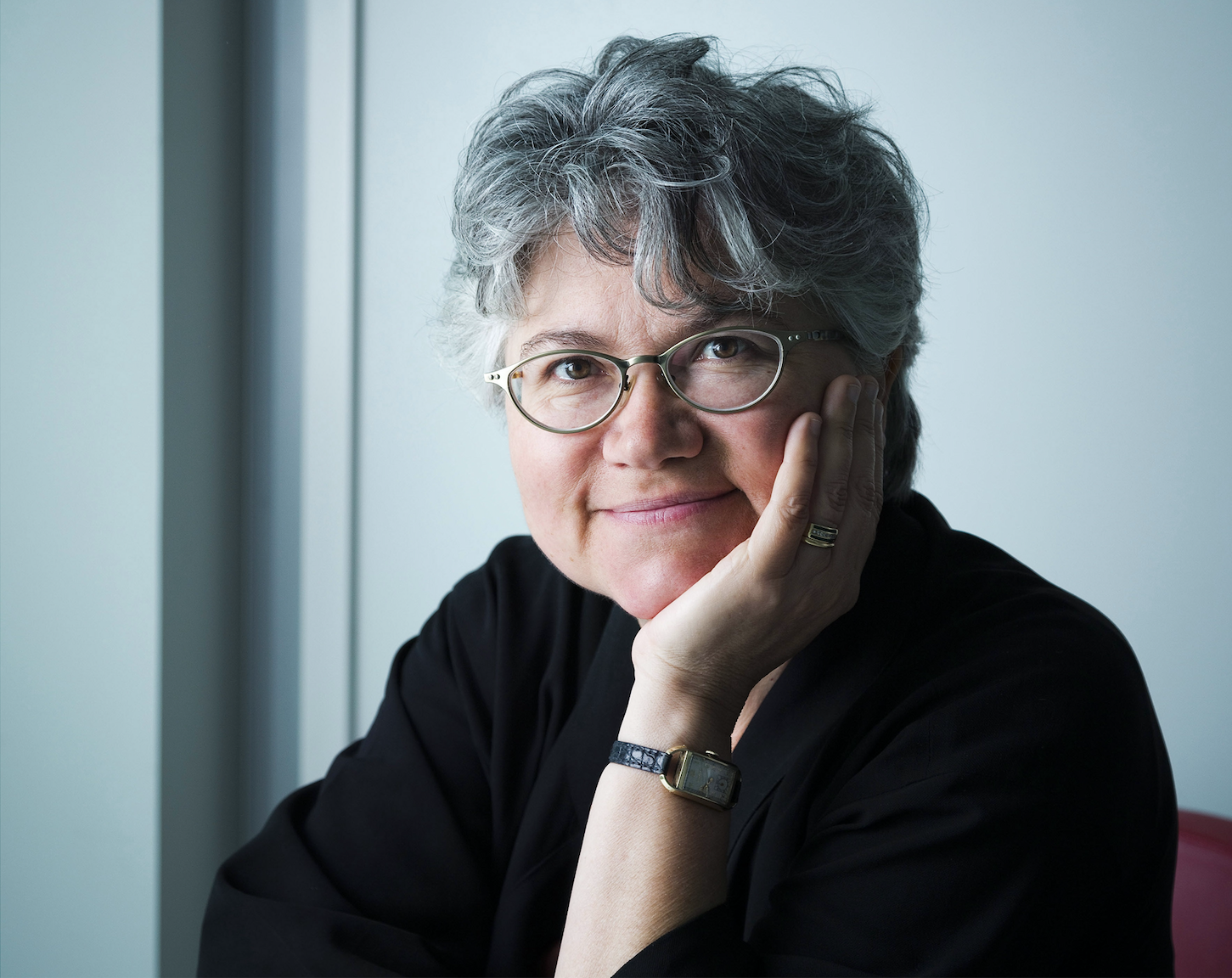
Dominique Méda is a professor of sociology at Université Paris Dauphine-PSL and president of the Veblen Institute. She has published numerous books on work and ecological issues. Her most recent publications include: Le travail. Pourquoi travaillons-nous ?, Autrement, 2026; (Re)penser le travail, with Max Lewko, Steinkis, 2026; and « Les caisses sont vides ». Le grand malentendu, with Éric Heyer and Pascal Lokiec, Champs Flammarion, 2026.
(photo ©Philippe MATSAS/opale.photo)
Tuesday 13 April 2027 - Plural and Popular African Economies: The Politics of Everyday Life
With Marie-Yemta MOUSSANANG
How is everyday life organised in contexts where most workers are outside formal employment? What forms of solidarity hold society together when there is no welfare state? Exploring Africa's popular economy offers a way to imagine different approaches to politics and to understand everyday arrangements as practices of resistance to a predatory state apparatus, while also functioning as a community-based, self-managed social protection system.
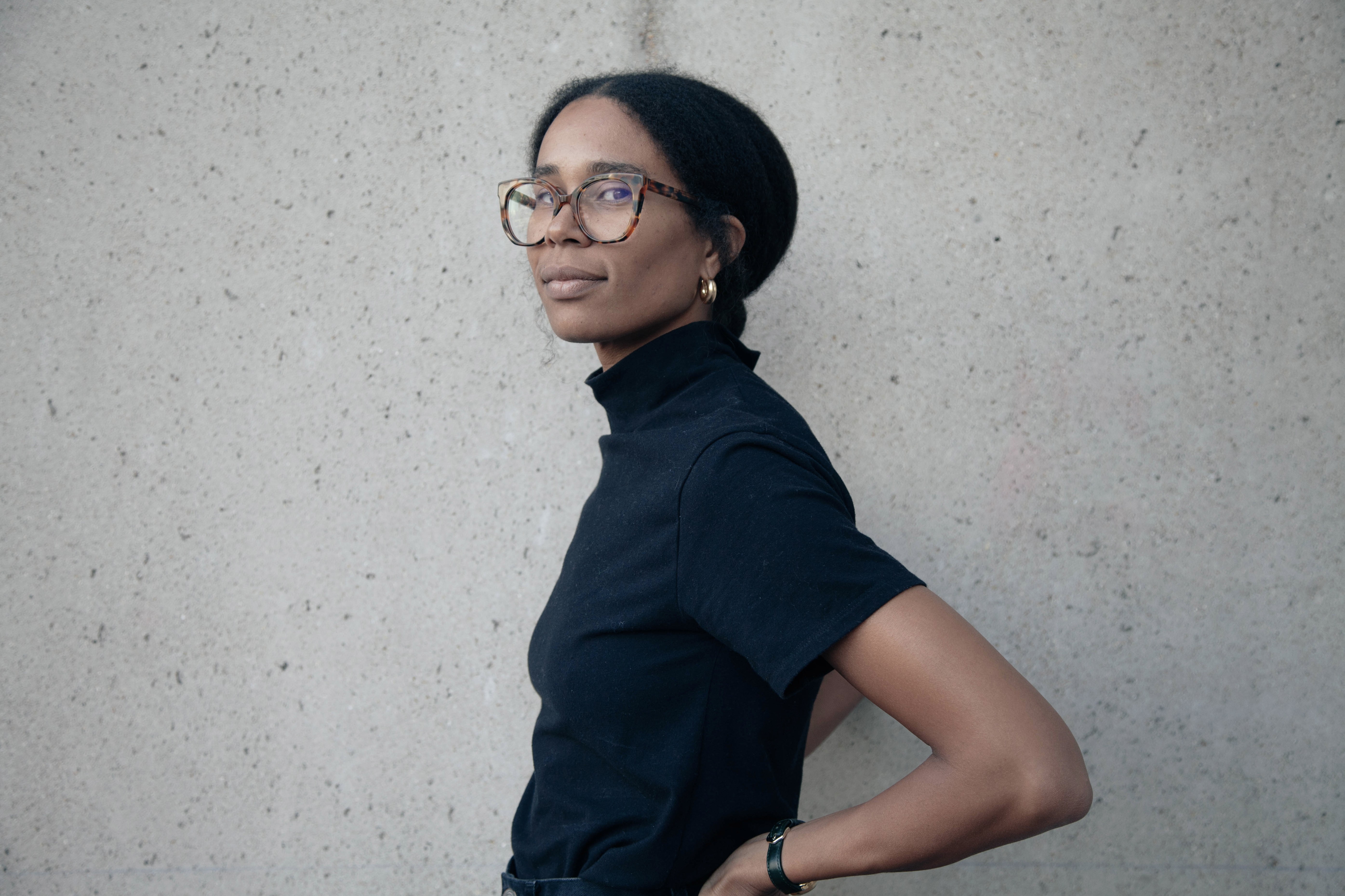
Marie-Yemta Moussanang produces the podcast Afrotopiques, which explores questions of economics and ecology from the perspective of the Global South. She teaches at Sciences Po and works between Paris, Dakar and N'Djamena.
(photo ©Maya Mihindou)


